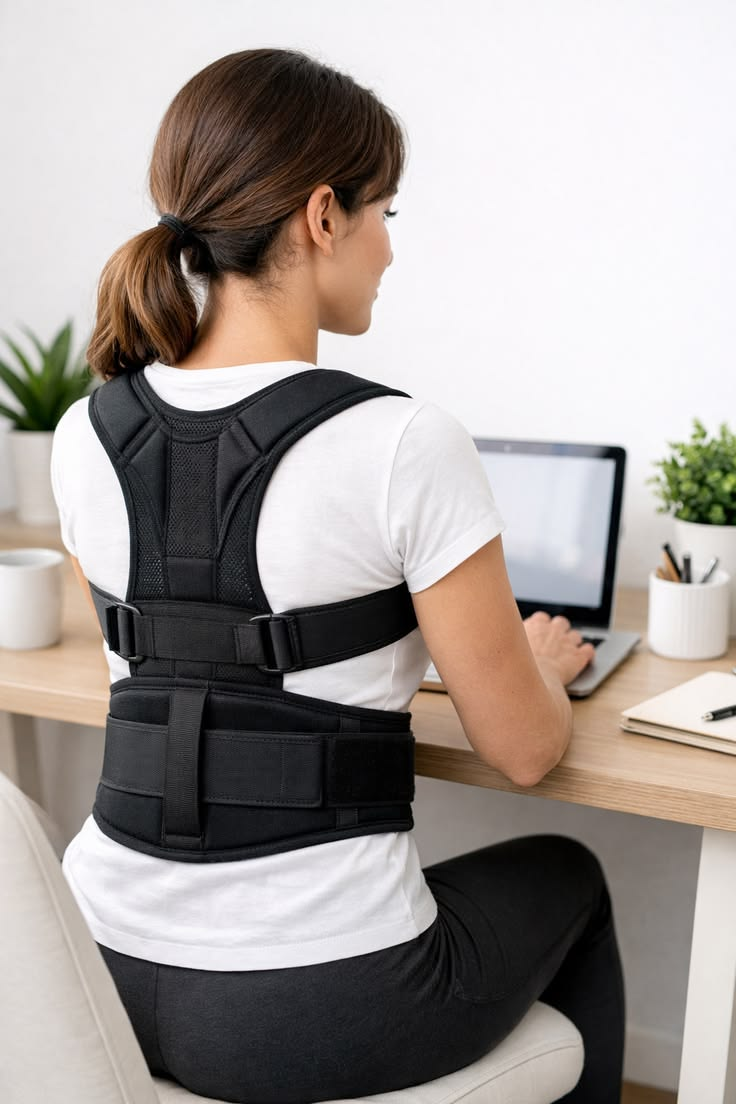
Back braces cover a wide spectrum — from a simple elastic belt you wear while lifting boxes to a rigid lumbosacral orthosis (LSO) prescribed after a spinal fusion. The type you need depends entirely on the medical situation.
A rigid LSO has hard plastic or composite panels that restrict motion in the lumbar spine in three planes: flexion, extension, and lateral bending. Surgeons prescribe these after spinal fusion, vertebral compression fracture, or significant disc herniation. The panels physically prevent the spine from moving while bone grafts heal or fractures stabilize.
A TLSO (thoracolumbosacral orthosis) extends higher, covering the thoracic spine as well. It's prescribed when the injury or surgical site is higher than what an LSO can control — typically around T6 and above.
An elastic lumbar support is a flexible belt with stays (semi-rigid strips) sewn into the fabric. It provides compression, warmth, and a proprioceptive reminder to maintain posture, but it does not immobilize the spine. These are commonly used for chronic low back pain, occupational lifting, and as a step-down from a rigid brace during late-stage recovery.
One important consideration: wearing a rigid back brace longer than prescribed can weaken the core muscles that support the spine. Most surgeons specify a schedule — full time for four weeks, then daytime only for four weeks, then wean off. Follow that schedule. An elastic support for lifting is a different matter and can be used as needed.
We carry rigid LSOs (L0637), TLSOs (L0456), lumbosacral corsets (L0641), elastic lumbar supports (L0631), sacroiliac belts (L0650), and posture correctors (L0450). All are sized by waist circumference. Call us with your prescription and we'll confirm the right model and size.
Have questions about your brace or sizing?
Visit our Downers Grove fitting room or ask for sizing help by phone. We check the prescription, measurements, and insurance benefits before confirming the model and your share. Call ahead to confirm fitting availability.